Blog · · IT Support in Tokyo Team
Bilingual SEO Strategy for Tokyo Businesses: English and Japanese Pages That Rank
A practical guide to structuring bilingual websites for Tokyo businesses, including search intent, URL planning, hreflang, local trust signals, and conversion paths.
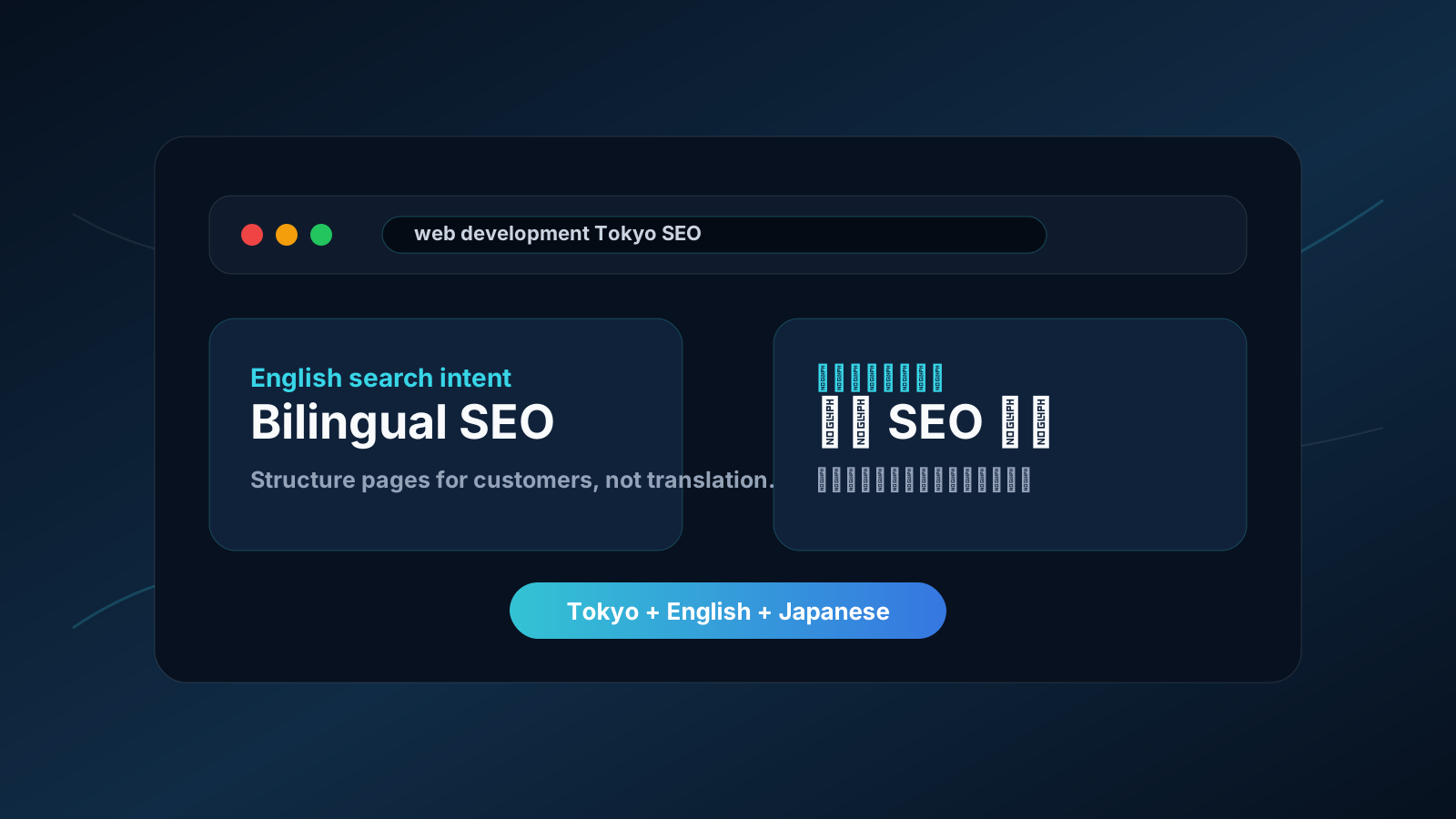
Bilingual SEO Is Not Just Translation
A bilingual website can open the door to Japanese customers, international residents, foreign-owned companies, tourists, and overseas partners. But many Tokyo business websites make the same mistake: they translate the words without rebuilding the page around how each audience searches.
English and Japanese search behavior can be very different. A Japanese customer may search by neighborhood, service category, price expectation, and trust signals. An English-speaking customer may search for bilingual support, Tokyo availability, emergency help, or simple explanations of how the service works in Japan.
Start With Search Intent in Each Language
Do not begin by translating an English keyword list into Japanese. Build two keyword maps. For English, include phrases like web development Tokyo, IT support Tokyo, English-speaking developer Japan, and bilingual app development. For Japanese, include terms such as Web制作 東京, ITサポート 東京, システム開発 東京, and AI導入 支援.
The goal is not to stuff pages with keywords. The goal is to understand what each visitor wants to solve and write the page around that job.
Use Clear URL and Language Structure
A bilingual site should make language versions easy for users and search engines to understand. Common patterns include /en/ and /ja/ folders, language-specific slugs, or a language switcher that preserves the equivalent page. Use canonical tags and hreflang so Google understands which page belongs to which language and region.
Avoid mixing English and Japanese randomly on the same service page unless there is a clear user reason. Mixed-language sections can be helpful for bilingual audiences, but the main SEO target should stay clear.
Add Local Trust Signals
For Tokyo and Japan-focused searches, trust matters. Add a clear company name, service area, address or operating region, contact options, response time, case studies, client outcomes, and examples of work. If the business serves both local Japanese companies and international teams, say that directly.
Local pages should answer practical questions: Do you work in English? Do you support Japanese contracts? Can you visit onsite? Do you support Tokyo, Kawasaki, Kanagawa, or nationwide remote projects?
Build Internal Links Around Services
SEO improves when your content connects naturally. A bilingual SEO article should link to relevant service pages such as web development services, digital marketing in Tokyo, and free consultation. Japanese pages should also link to Japanese-friendly service paths and explain the next step clearly.
Internal links help search engines understand your site architecture, but more importantly they help real visitors move from research to action.
Measure Leads, Not Only Rankings
Ranking is useful, but the business goal is qualified inquiries. Track form submissions, phone taps, email clicks, calculator starts, and consultation bookings by language. If English pages get traffic but no leads, the page may need clearer pricing, stronger proof, or a simpler contact path.
Good bilingual SEO combines content, technical structure, local trust, and conversion design. Translation is only one part of the work.
If your Tokyo business needs a bilingual website that can rank and convert, book a free consultation. We can review your current structure and show where English and Japanese search intent are being missed.
東京企業のためのバイリンガルSEO戦略:英語・日本語ページで検索に強くなる方法
東京の企業サイトで英語・日本語ページを検索に強くするための実践ガイド。検索意図、URL設計、hreflang、地域の信頼要素、問い合わせ導線を解説します。
バイリンガルSEOは単なる翻訳ではありません
バイリンガルサイトは、日本のお客様、在日外国人、外資系企業、観光客、海外パートナーとの接点を広げます。しかし多くの東京企業のWebサイトでは、文章だけを翻訳し、検索する人の目的に合わせたページ設計ができていません。
英語と日本語では検索行動が違います。日本語ユーザーは地域名、サービス名、料金感、信頼性を重視して検索することが多いです。英語ユーザーは、英語対応、東京で対応可能か、緊急対応、サービスの仕組みがわかりやすいかを探していることがあります。
言語ごとに検索意図を整理する
英語のキーワードを日本語に直訳するところから始めないでください。英語と日本語で別々にキーワードマップを作ります。英語では web development Tokyo、IT support Tokyo、English-speaking developer Japan、bilingual app development などが候補になります。日本語では Web制作 東京、ITサポート 東京、システム開発 東京、AI導入 支援 などを検討します。
大切なのはキーワードを詰め込むことではありません。検索している人が何を解決したいのかを理解し、その目的に合うページを作ることです。
URLと言語構造を明確にする
バイリンガルサイトでは、ユーザーにも検索エンジンにも言語の対応関係がわかる構造が必要です。/en/ と /ja/ のフォルダ、言語ごとのスラッグ、同じ内容のページへ移動できる言語切替などが代表的です。canonicalタグとhreflangを使い、Googleにどのページがどの言語・地域向けかを伝えます。
明確な理由がない限り、1つのサービスページに英語と日本語を無秩序に混ぜるのは避けましょう。バイリンガルユーザー向けに補足を入れるのは有効ですが、SEO上の主なターゲットは明確にする必要があります。
地域の信頼要素を入れる
東京や日本向けの検索では、信頼性が重要です。会社名、対応エリア、住所または活動地域、問い合わせ方法、返信目安、事例、実績、制作例を明確にしましょう。日本企業と外資系チームの両方に対応できるなら、その点も具体的に伝えるべきです。
地域ページでは実務的な疑問に答えます。英語で対応できますか。日本語の契約や請求に対応できますか。訪問対応はありますか。東京、川崎、神奈川、または全国リモートに対応していますか。
サービスページへ自然に内部リンクする
SEOでは、記事とサービスページが自然につながっていることが重要です。バイリンガルSEOの記事からは、Web開発サービス、東京のデジタルマーケティング、無料相談などへリンクできます。日本語ページでは、次に何をすればよいかもわかりやすく示しましょう。
内部リンクは検索エンジンにサイト構造を伝えるだけでなく、実際のユーザーを調査段階から問い合わせへ導きます。
順位だけでなく問い合わせを測定する
検索順位は重要ですが、事業上の目的は質の高い問い合わせです。言語ごとにフォーム送信、電話タップ、メールクリック、料金計算、相談予約を測定しましょう。英語ページにアクセスはあるのに問い合わせが少ない場合、料金の見せ方、実績、問い合わせ導線を改善する必要があります。
良いバイリンガルSEOは、コンテンツ、技術構造、地域の信頼性、コンバージョン設計を組み合わせます。翻訳はその一部にすぎません。
東京で検索に強く、問い合わせにつながるバイリンガルサイトを作りたい方は、無料相談をご利用ください。現在のサイト構造を確認し、英語・日本語それぞれの検索意図で取りこぼしている点を整理します。