Web and mobile app development in Tokyo
App development in Tokyo,built to grow.
A useful first release now. An API and data foundation that can grow with your business.
A clear scope and estimate before work starts. Final pricing depends on features and platform needs.

Start with the problem worth solving.
A startup may need to test one idea with real customers. A growing company may need to replace spreadsheets or give staff a better way to work. Our first conversation is about the people, the workflow, and the result.
We shape a first release that fits the budget and leaves room to grow. A web-first, API-first approach gets the product into users’ hands while preparing its data and business rules for mobile apps, integrations, and heavier traffic.

App development costs: affordable entry points, clear scope
A useful first release does not have to fund every future feature on day one. We estimate the smallest version that can solve the core problem, then show what belongs in later phases.
Web app MVP
From ¥100,000
A focused browser-based workflow, internal tool, booking flow, or customer-facing prototype. We define the exact screens, data, and integrations in the proposal.
iOS / Android app project
From ¥250,000
A scoped mobile first release. Platform choice, account features, backend, store submission, and testing requirements determine the final estimate.
These are starting prices, not fixed quotes for every app. Taxes, cloud hosting, third-party services, store account fees, and ongoing support are itemized when applicable. A project targeting both mobile platforms may require a larger scope.
Our app development flow
We make the first release useful, then expand based on evidence. You can see what is being built, what it will cost, and what decision comes next.
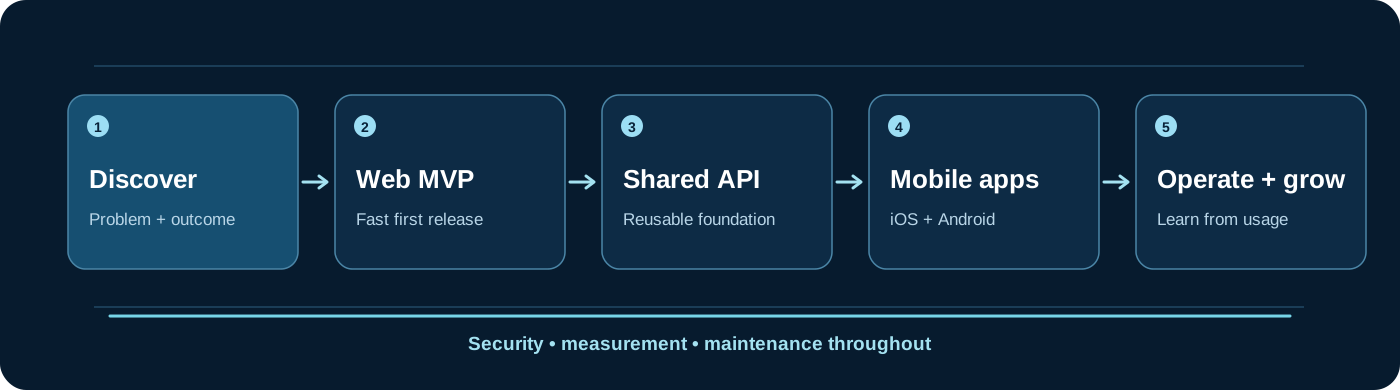
1. Discover the problem and define the first release
We meet with the founder or team, map the user's task, and agree on one measurable outcome. We turn that into a short scope: who uses the app, the essential screens, the data it needs, and what can wait. You receive a proposal before development begins.

2. Put the web experience in users' hands
A responsive web app can validate a workflow without waiting for app store review. It is often the quickest route to a real pilot, whether the product is a booking tool, client portal, field-service dashboard, marketplace concept, or internal process. We test the important path on phones and desktops, then refine it with your feedback.
3. Design the API and data for the next stage
Web first does not mean a throwaway build. We separate the user interface from the core business rules through well-defined APIs where the project needs them. Authentication, permissions, data ownership, backups, logs, and sensible usage limits are considered early. This gives a later mobile app or partner integration a foundation to connect to, while leaving room to change the system as demand becomes clear.

4. Add iOS and Android where they create value
Native mobile features are valuable when your users need push notifications, camera access, location, offline work, or a place in the app stores. We decide when those benefits justify the additional build and review work. The API-first foundation can let the mobile experience reuse the same trusted data and workflows instead of rebuilding the product from zero.
When store distribution is part of the agreed scope, we prepare the app, assets, privacy details, testing, and submission materials for the selected platform.


Store approval is decided by Apple or Google. These badges illustrate release channels; they are not download links for a sample app.
5. Launch, learn, and improve
We hand over a working product and a clear operating picture: what shipped, how it is hosted, who has access, and which improvements matter next. As usage grows, we can add capacity, observability, integrations, and features based on real demand rather than guesswork.

Built for a startup, a small business, or a larger team
A founder may need a pilot to test demand. A small company may need a reliable tool to replace manual work. An established team may need an API-connected product that fits existing systems. We tailor the first phase to the decision at hand, then keep the architecture proportionate to the real risk and expected growth. See our mobile app development service or web development service for more detail about each route.
Questions founders ask before starting
Does the ¥250,000 starting price include both iOS and Android?
It is a starting point for a scoped mobile app project. We quote the selected platform or platforms, features, backend, testing, and store work in the written proposal. Building for both platforms may cost more.
Can a web app become a mobile app later?
Often, yes. A web-first release can validate the workflow, while a well-defined API and data model can support a later mobile experience. We review the real use case before choosing how much infrastructure to build in the first phase.
How long will the first release take?
Timing depends on the agreed scope, review rounds, integrations, and app store requirements. We propose milestones after discovery so you can see what is included and when decisions are needed.
Tell us the problem. We will map the first release.
Bring a rough idea, a spreadsheet, a broken workflow, or an existing app. We will help you choose a practical starting point and explain the scope behind the estimate.