
How to Get Hired as a Web or App Engineer in Japan
Key takeaways
Target one engineering role, maintain a current skill sheet, tailor your resume, and prove your work through a portfolio, GitHub, deployed projects, and clear interview stories.
Short answer: getting hired as a web or app engineer in Japan is easier when your application makes one role obvious. A long list of technologies is less persuasive than evidence that you can solve the problems named in the job description. Choose a target such as frontend engineer, backend engineer, full-stack engineer, iOS engineer, or Android engineer; then align your resume, skill sheet, portfolio, GitHub, and interview examples around that target.
Japanese companies commonly use the word engineer in role names, including Webエンジニア, フロントエンドエンジニア, バックエンドエンジニア, iOSエンジニア, and Androidエンジニア. Search with the title employers use, not only the title you used in another country.
1. Pick a Target Role Before Rewriting Your Resume
Start by collecting 15 to 20 realistic job descriptions. Highlight repeated requirements: language, framework, database, cloud platform, testing, Japanese level, product experience, and years of responsibility. This gives you a market-backed checklist rather than a random study plan.
| Target role | Evidence employers should see quickly |
|---|---|
| Frontend engineer | TypeScript, React or Vue, responsive UI, accessibility, API integration, testing, performance |
| Backend engineer | API design, authentication, databases, caching, tests, security, cloud deployment |
| Full-stack engineer | One complete product journey from interface and API to data, deployment, monitoring, and maintenance |
| iOS engineer | Swift, SwiftUI or UIKit, app architecture, networking, persistence, testing, App Store release work |
| Android engineer | Kotlin, Compose or Views, architecture, networking, persistence, testing, Play release work |
You can have many skills while still presenting a focused application. Keep a comprehensive master resume, then create a role-specific version that moves the most relevant projects and outcomes to the top. Do not claim expertise you cannot demonstrate in a technical interview.
2. Prepare the Documents Japanese Hiring Teams Expect
Depending on the employer or recruiter, you may be asked for a rirekisho (履歴書), a shokumu keirekisho (職務経歴書), and an engineering skill sheet (スキルシート). They serve different purposes.
- 履歴書: a concise personal, education, employment, qualification, and availability record.
- 職務経歴書: a narrative of your responsibilities, results, strengths, and career progression.
- スキルシート: a project-by-project technical inventory covering dates, role, team, industry, process, technologies, responsibilities, and outcomes.
Japan's Hello Work guidance emphasizes that application documents materially affect selection and that the work history document should communicate concrete experience that does not fit in the resume. Keep every document consistent: dates, titles, employers, and project descriptions should not contradict one another.
A Useful Skill-Sheet Row
For each project, record the period, product purpose, users, team size, your role, development phase, language, framework, database, infrastructure, tools, and measurable result. Replace vague statements such as “worked on React” with evidence: “implemented the checkout flow, added component tests, and reduced mobile interaction delay.”
Update the skill sheet whenever a project, responsibility, certification, or major technology changes. Reconstructing several years of project detail the night before an interview is both slow and error-prone.
3. Build a Portfolio That Proves Product Judgment
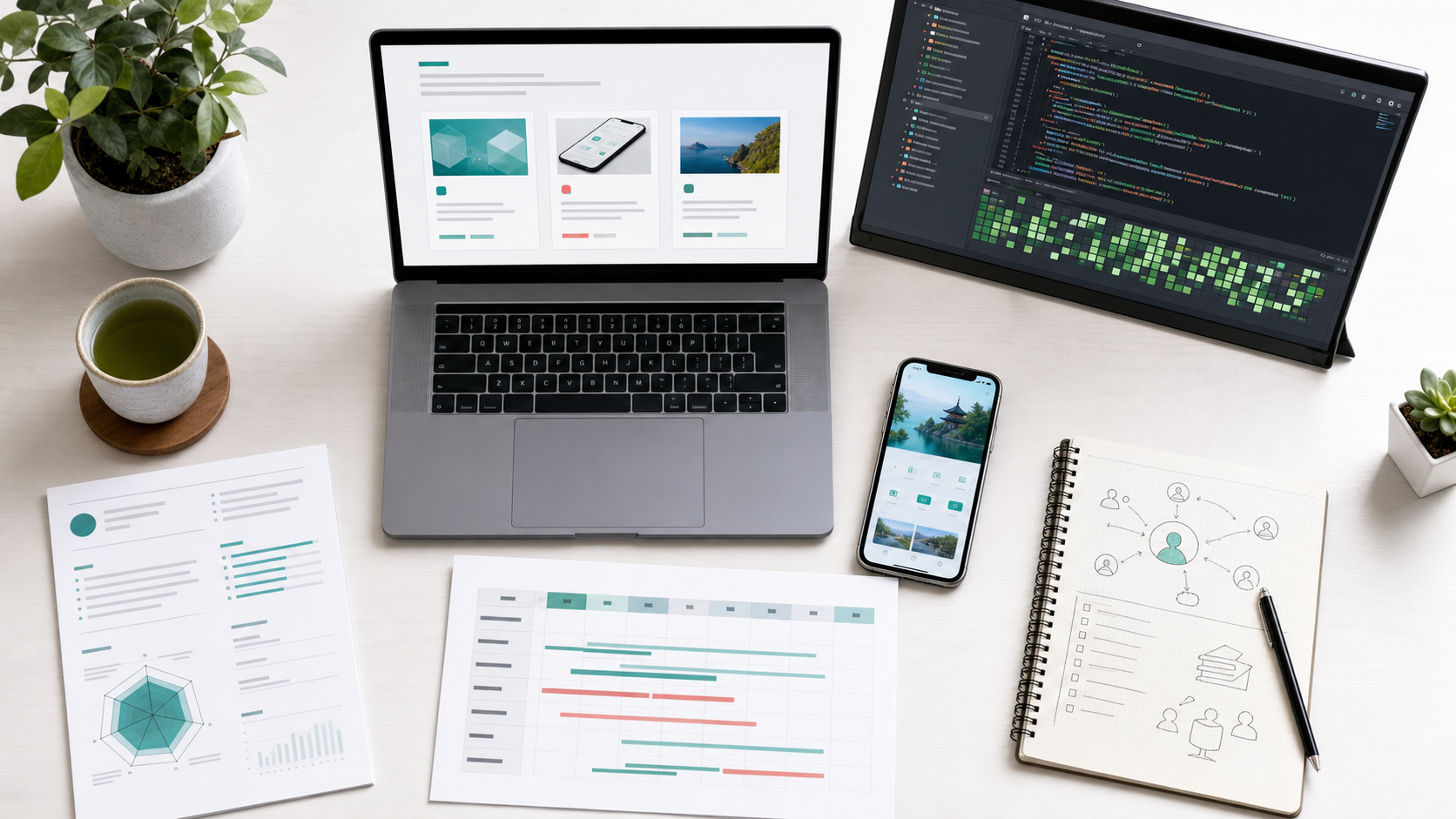
A portfolio is not only a gallery. For each selected project, explain the problem, users, constraints, your exact contribution, architecture, difficult decision, testing approach, result, and what you would improve next. Two or three credible case studies are stronger than ten unfinished demos.
Include a live URL when safe, a short demonstration video when setup is difficult, screenshots that show real flows, and a repository link when the code can be public. If professional work is confidential, create a sanitized case study that discusses your responsibilities and decisions without exposing client data or proprietary code.
What Hiring Teams Should Learn in Two Minutes
- What kind of engineer you are seeking to become.
- Whether you can finish and deploy a useful product.
- How you make technical and UX decisions.
- How you test, debug, document, and maintain your work.
- Whether you can explain your contribution honestly.
4. Make GitHub Evidence Easy to Review
Your GitHub profile should support your application, not create another investigation for the recruiter. Pin the repositories that match the target role. Give each one a useful README with the product purpose, screenshots, stack, setup steps, architecture notes, tests, and current status.
A contribution graph alone does not prove engineering quality. Clear commits, issues, pull requests, tests, documentation, and steady improvement tell a better story. Remove exposed secrets, broken demo links, copied tutorial repositories presented as original work, and abandoned projects that obscure your strongest evidence.
5. Learn Both Frontend and Backend Fundamentals
You do not need to market yourself as a senior full-stack engineer. However, understanding the full request path makes you more useful: browser or mobile UI, API, authentication, database, files, deployment, logs, monitoring, and security.
Japan's 2026 Digital Skill Standard from the Information-technology Promotion Agency identifies frontend development, backend development, cloud infrastructure, software design, team development, quality, and current technology trends as connected software-engineering capabilities. Use that breadth to collaborate better while keeping one primary specialty.
6. Search Through Several Channels
No single platform contains the whole market. Use a mix of direct company career pages, general job sites, engineer-focused platforms, bilingual sites, and recruiters. Representative options include LinkedIn and Indeed Japan; Wantedly, Green, Forkwell, Findy, and BizReach; and bilingual or international-tech platforms such as Daijob, CareerCross, Japan Dev, TokyoDev, and GaijinPot Jobs. Availability and fit change, so verify each listing on the employer's current careers page.
Local recruiters can explain salary bands, interview stages, language expectations, visa sponsorship, and which version of your documents a client expects. Treat recruiters as one channel, not your entire strategy. Keep your own application tracker with role, source, contact, date, stage, follow-up, and outcome.
7. Prepare for the Japanese Interview Process
Processes vary, but may include document screening, recruiter or HR conversation, technical interview, coding exercise or take-home assignment, team interview, and final conditions discussion. Prepare concise stories about a difficult bug, disagreement, production incident, quality improvement, missed estimate, customer requirement, and project you completed.
For every story, clarify the situation, your responsibility, what you personally did, the result, and what you learned. In Japanese interviews, accurate and structured communication often helps more than trying to sound overly confident. If your Japanese is developing, prepare technical vocabulary and rehearse your project explanation in both Japanese and English.
8. Check Work-Authorization Requirements Early
Foreign candidates should confirm the appropriate status of residence before accepting assumptions from a job post or social media. Japan's Ministry of Foreign Affairs lists IT engineers as an example under the Engineer/Specialist in Humanities/International Services working-visa category, but eligibility depends on the person, education or experience, role, employer, and application. Check the Immigration Services Agency guidance and obtain professional advice for your situation.
A Practical Four-Week Application Reset
- Week 1: choose one target role, analyze 20 listings, and create a requirement matrix.
- Week 2: update your 履歴書, 職務経歴書, skill sheet, LinkedIn, and Japanese self-introduction.
- Week 3: polish two portfolio case studies, pin relevant repositories, add tests and useful READMEs.
- Week 4: apply through several channels, speak with selected recruiters, rehearse technical stories, and review results weekly.
Final Advice
Stay current, but do not chase every framework. Employers hire evidence, relevance, communication, and learning ability. A focused frontend application with strong UI, accessibility, testing, and API work can outperform a resume that lists 40 technologies without depth. A mobile engineer who can explain release, crash, performance, and product decisions is more memorable than someone who only lists Swift or Kotlin.
Need a Portfolio Website or Project You Can Present Clearly?
IT Support in Tokyo is a development company, not a recruitment agency. We can help you design and build a professional portfolio website, turn a product idea into a working web or mobile project, or improve the performance and presentation of an existing application. Contact our bilingual team to discuss the build.