The Future of Social Networks Is More Than Scrolling: Location, VR and Social Commerce
Key takeaways
The next social network will not be only a feed. It will connect people to places, shared spatial experiences, nearby communities, creators, and commerce. See how iSocialize and iS Gather point toward that future.
The feed is not disappearing. It is becoming one doorway among many. The next generation of social networks will be experienced through places, live presence, shared spatial activities, creator-led commerce, and interactions that begin in the physical world and continue online.
For more than a decade, social product design has been optimized around a familiar loop: open an app, swipe through an endless feed, react, and repeat. That loop is efficient, but it compresses friendship, entertainment, discovery, and shopping into the same narrow gesture. A more ambitious social network asks a different question: what can people do together because they are here, now?

Why endless scrolling feels like an incomplete future
Scrolling is excellent for distributing media. It is less effective at conveying presence. A post can tell you that a friend visited a neighborhood yesterday; a location-aware network can help you understand what is happening there now. A video can introduce a product; a social-commerce layer can let you ask the creator a question and complete the purchase without losing context. A comment thread can host conversation; a spatial experience can give people a sense that they are sharing the same activity.
This does not mean every network should expose precise location or become a virtual world. It means social products can use more dimensions than chronology and engagement ranking. Time, distance, place, movement, identity, shared objects, and transactions can all become part of the experience—when users understand and control them.
Five layers of the next social network
1. Location becomes context, not simply tracking
The weakest version of a location product is a dot that answers “where is someone?” The more useful version answers “what can happen here?” It can surface a nearby community, an event, a creator, a local video, a shop, or an easy way to meet. Location then becomes a relevance signal that reduces the distance between online discovery and real-world action.
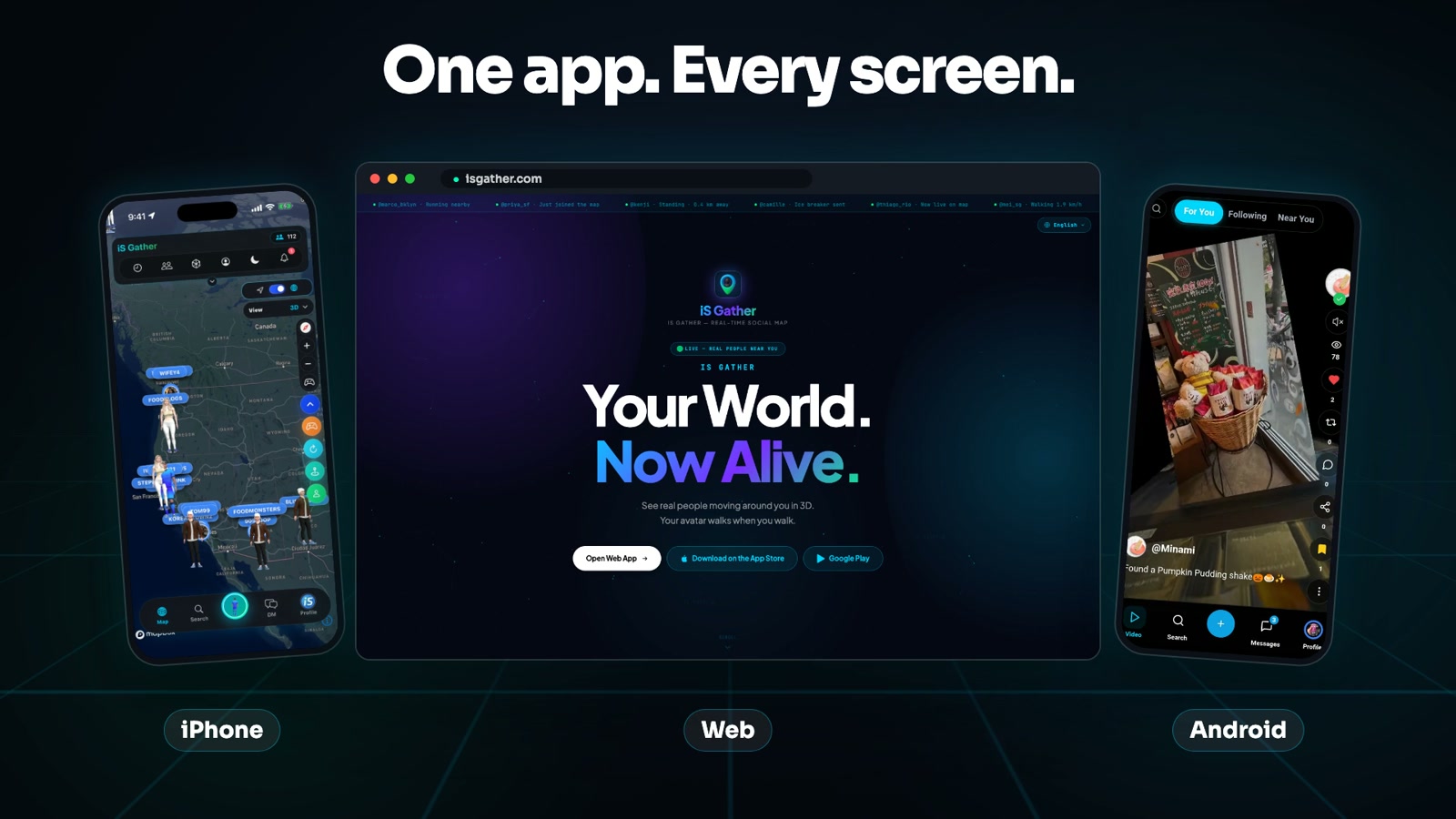
iS Gather illustrates this map-first direction. Its published product experience includes a live 3D map, personalized moving avatars, nearby discovery, one-tap ice breakers, messaging, short-form video, global exploration, and visibility controls. The map is not decoration around a feed; it is the social interface.
2. Presence becomes spatial
VR and spatial computing matter because they change the unit of social interaction. Instead of merely looking at the same post, people can occupy a shared context, point at the same object, notice attention, and act together. Apple’s guidance for spatial SharePlay describes shared context and spatial Personas as ways for participants to feel present around the same activity. Meta has similarly developed social VR around profiles, avatars, shared spaces, games, and co-presence.
Headsets will not replace phones for everyday social use. The nearer-term opportunity is a bridge: 3D avatars and maps on mobile, shared AR at a physical venue, spatial video, and optional immersive rooms for moments that benefit from them. iS Gather is not presented as a VR headset app; its 3D map and motion-aware avatars are better understood as a mobile step toward a more spatial social language.
3. Interaction replaces passive reach
A healthy social product gives people verbs. Meet, ask, join, create, guide, trade, play, and explore are stronger foundations than “view” alone. Ice breakers lower the cost of a first conversation. Local video adds human context to a place. A shared map makes movement legible. Live and spatial formats turn an audience into participants.
The meaningful metric for the next social network may not be how long people watched. It may be what they were able to do together.
4. Social commerce shortens the path from story to sale
Traditional ecommerce begins with intent: a shopper already knows what to search for. Social commerce can create intent. A maker demonstrates an object, a local seller shows its condition, or a creator explains why it matters. The story, person, product, conversation, and checkout remain connected.
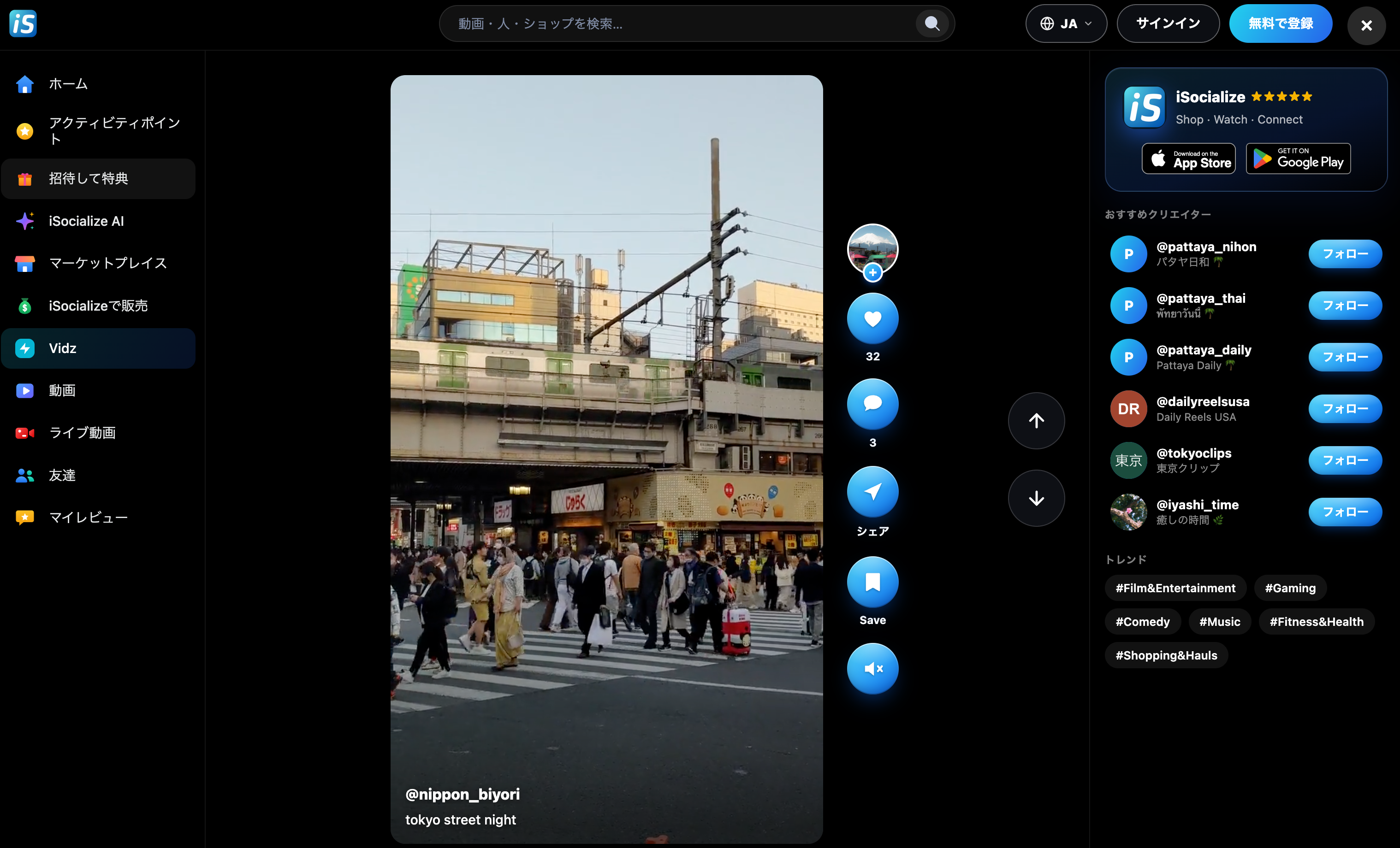
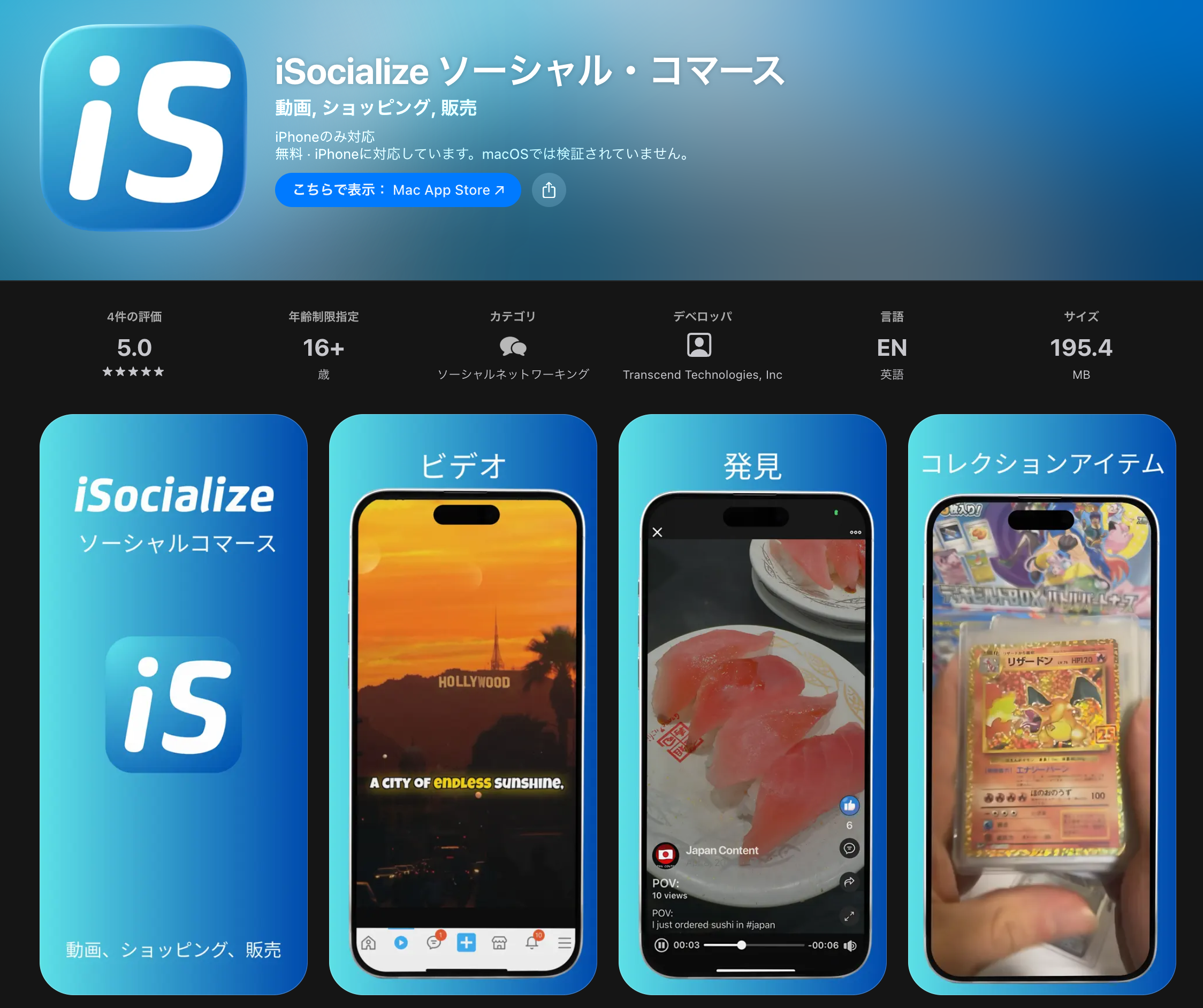
iSocialize is built around that flow. Its official product pages describe a video shopping platform where creators and sellers can publish short video, build a following, message buyers, list products without an upfront fee, and support shipped or local purchases. In Japan, the 2025 Small Business White Paper reports that small businesses use social media for product communication, customer interaction, and new customer acquisition—exactly the work social commerce brings into one journey.
5. Trust and privacy become visible product features
Location and commerce increase the value of a network, but they also raise the stakes. People need clear visibility modes, deliberate sharing, understandable audience boundaries, safe first-contact patterns, seller identity, secure checkout, reporting, and the ability to leave. Privacy cannot live only in a policy page; it needs to be legible at the moment of action.
iSocialize and iS Gather: two complementary directions
These are distinct products, not one combined app. Their value in this discussion is that they explore two parts of the same future. iSocialize begins with content, creators, products, and transactions. iS Gather begins with people, movement, place, and real-time discovery.
What a location-to-commerce journey could feel like
- Discover a place: a map shows a market, performance, pop-up, or active community nearby.
- Understand the moment: local video and profiles explain what is happening and who is involved.
- Join with context: an ice breaker, event room, or shared spatial activity removes the cold-start problem.
- Meet the creator or seller: the person behind an object or experience remains visible.
- Act: reserve, buy, collect locally, arrange shipping, or save the place for later.
- Continue the relationship: follow the creator, revisit the community, or return to the location.
This journey is more valuable than inserting a “Shop” button under every post. It connects discovery, trust, social proof, place, and fulfillment. The commerce feels like a consequence of participation instead of an interruption.
The practical product roadmap
Teams do not need to build a metaverse on day one. A credible path is incremental:
- Now: fast mobile feed, maps, clear profiles, direct messaging, local discovery, reliable checkout, and explicit privacy controls.
- Next: live presence, 3D avatars, event layers, creator storefronts, local pickup, reputation, and richer safety tools.
- Later: shared AR, spatial video, headset-compatible gathering spaces, persistent virtual objects tied to real places, and portable identity.
The hard work is not rendering a 3D world. It is designing consent, moderation, identity, payments, location accuracy, battery use, fraud controls, and reasons for a community to return. Technology creates the surface; social trust creates the network.
The future is a social layer over the world
The winning social products will still use feeds, but they will not stop there. They will help people understand a place, feel another person’s presence, join an activity, discover a creator, and take action without breaking the social context that made the moment meaningful.
iSocialize shows how media can become a marketplace without losing the creator. iS Gather shows how a map can become a social space rather than a utility. Together, they point toward a broader idea: social networking can move from content we consume to a world we participate in.
Explore the products
Visit iSocialize for video-led social commerce and iS Gather for real-time map-based social discovery. Building a location, spatial, creator, or marketplace product? Talk with IT Support in Tokyo about product design and engineering.